
✓
Paper labels
Usually detected by contrast between label and backing paper.
Sensor guide
Label sensors detect the gap or edge between labels so the applicator can dispense each label accurately. Clear labels, film labels and low-contrast designs may need specific sensor consideration.
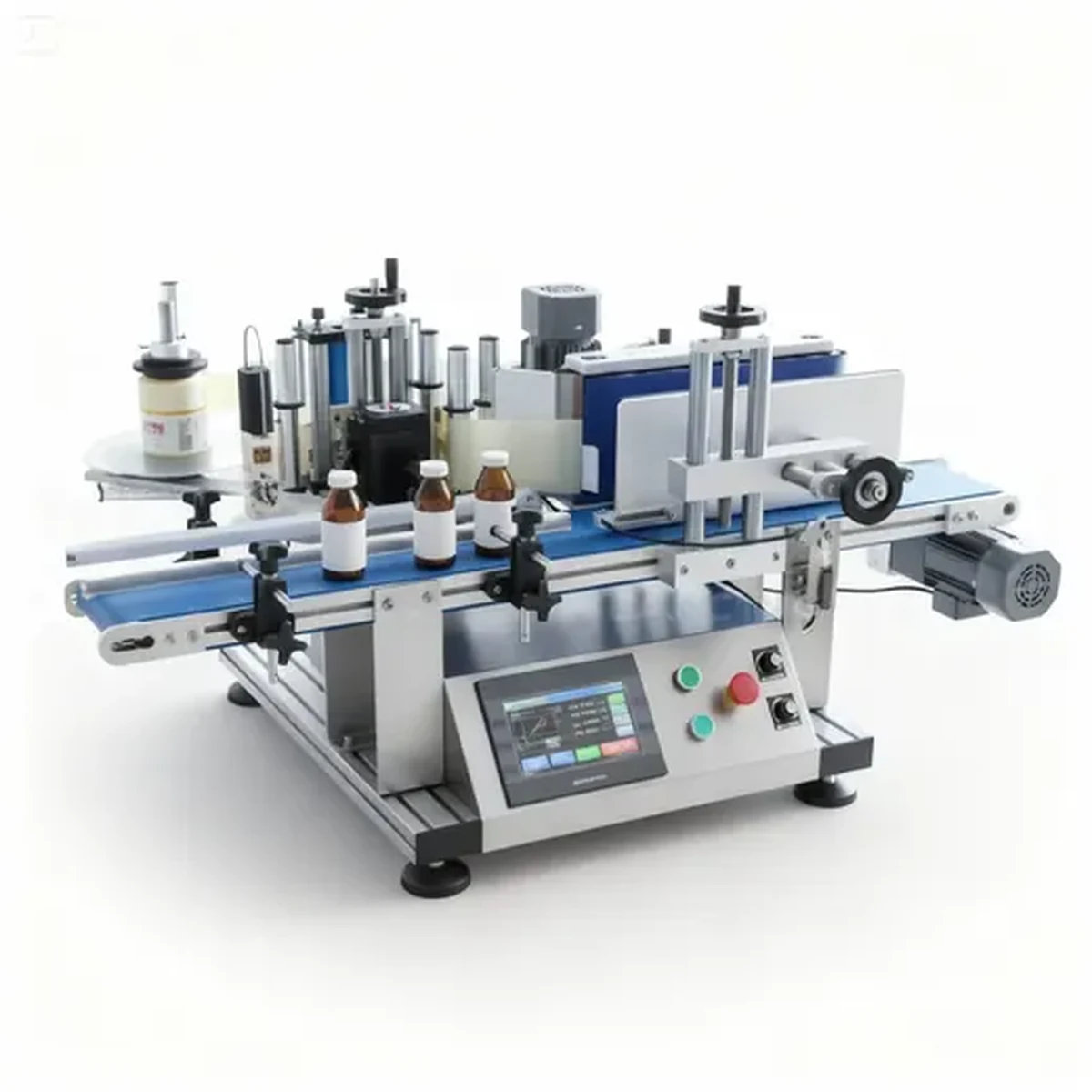
Technical guide
Most self-adhesive labelling machines rely on sensor feedback to control label dispense. Standard paper labels are often straightforward, but transparent labels on transparent backing can require a clear-label sensor or alternative setup. Early testing avoids unreliable label feed.
Usually detected by contrast between label and backing paper.
May need specialist clear label detection or careful setup.
Check thickness, reflectivity and backing contrast before production.
Practical comparison
| Label type | Sensor consideration | Buyer action |
|---|---|---|
| Paper label | Gap detection is usually straightforward | Send label samples for confirmation |
| Clear film | Low contrast can be difficult | Ask about clear label sensors |
| Metallic label | Reflective surfaces can interfere | Test samples before committing |
| Small label gap | Sensor timing may be more sensitive | Confirm backing gap and repeat length |
Specification advice
Review the actual container shape, diameter, label panel and surface finish. A label applicator works best when the pack is stable and the label area is predictable.
Confirm label material, roll direction, label gap and adhesive before ordering production labels. Clear, film or metallic labels may need extra testing.
Decide whether the operation is batch-fed, compact automatic or part of a conveyorised filling and capping line. The best machine is the one that fits the full process.
Related guidance
Use these guides to compare machine routes, confirm the label and container specification, and prepare the evidence needed for a useful quotation.
Browse selection, setup, sensing, output, integration and troubleshooting guidance for round-container labelling projects.
Compare bench, compact and automatic routes using container, label, output, changeover and integration requirements.
Collect container dimensions, label-roll data, output, coding and site details before requesting a machine quotation.
Check unwind direction, leading edge and roll presentation before ordering production labels or arranging a trial.
Measure the usable cylindrical panel and estimate label length, seam gap or overlap for a representative sample.
Separate headline cycle rate from sustainable accepted output by allowing for handling, coding, stops and changeovers.
Work through container, roll, sensor, guide and wrap settings when labels skew, wrinkle, bubble or fail to dispense.
Browse selection, setup, sensing, output, integration and troubleshooting guidance for round-container labelling projects.
Review conveyorised wraparound labelling for higher-output round-container lines and upstream or downstream integration.
Review a smaller automatic route for growing production where repeatability is needed without a full-size inline system.
Review operator-fed wraparound labelling for shorter batches, frequent changeovers and limited production space.
Compare bench, semi-automatic, compact and fully automatic wraparound labellers in one range overview.
Questions
Not always, but transparent labels should be tested because standard sensors may not reliably see the label edge.
Often yes, if the sensor and setup support both label types.
Send the final label material on the intended backing paper, not only artwork proofs.
Technical review
This guide is maintained by Lancing's packaging machinery team. Lancing states that it has specialised in semi-automatic and fully automatic machinery for over 40 years and supports equipment across the UK, Europe and worldwide. Final recommendations are confirmed against actual containers, labels and production targets.
Last technical review: 11 July 2026 · About Lancing · Official company profile
Quick enquiry
Include container diameter, label size, material, target output and whether the label is paper, film or transparent. Lancing can recommend a suitable semi-automatic, compact or automatic configuration.
Phone: 01494 623015
Email: sales@lancinguk.com
Sensor verification
Sensor selection depends on the contrast created by the label, gap and backing liner, not only the marketing name of the face material.
A conventional gap sensor often detects the change between a label and exposed backing. Opaque paper usually creates a clearer change than a transparent film. Clear, low-contrast or unusual constructions may need a clear-label sensor or a different sensing principle. Metallic inks, varnish, printed blocks, multiple layers and a translucent liner can also change the signal.
Loose labels do not prove unwind or detection. Supply the face material on its final liner with the production gap, web width, core, winding direction and expected roll diameter.
Test consecutive labels from more than one area of the roll. Record missed gaps, double feeds or false triggers and note the sensor setting used.
A sensor may appear stable during slow manual movement but behave differently at the intended web speed. Confirm detection while the full labelling cycle is running.
| Label construction | Typical verification need | Evidence to retain |
|---|---|---|
| Opaque paper | Confirm repeatable gap detection and that print or die-cut variation does not cause false triggers. | Production roll reference, sensor setting and consecutive-run result. |
| Opaque or printed film | Check contrast through the complete label and liner and test static or web handling. | Material specification, roll direction and run video. |
| Transparent film | Use the proposed clear-label detection method with the final liner and actual gap. | Sensor type, setting, roll batch and recorded missed/false-trigger result. |
| Metallic or unusual construction | Physical testing is essential because reflectivity and layered materials can change detection. | Final artwork/material sample and repeat trial record. |
Sensor success is only one part of the application. The same trial should check label peeling, wrap pressure, bubbles, seam alignment and adhesion on the production container. Use the sample-testing protocol to record those results and the roll-direction guide to confirm how the label must present at the peel point.
Sensor test matrix
A sensor does not assess the face label in isolation. It responds to the combined label, liner, gap, print, die cut, web tracking and machine setting, so the production roll is the correct test article.
| Label and liner condition | Potential risk | Evidence to capture |
|---|---|---|
| Opaque paper label with a consistent gap | Usually straightforward, but poor die cutting, variable gap or web wander can still create an inconsistent label-start signal. | Continuous run count, first-label position after start-up and any missed or double label feeds. |
| Transparent film label | A standard gap sensor may not see sufficient contrast between the label and liner. | Trial with the proposed clear-label sensor using the final film, liner, print and gap at normal web speed. |
| Clear label on a clear or low-contrast liner | The combined construction may offer very little detectable change at the gap. | Document the exact material references and retain a production roll for confirmation before the machine and labels are committed. |
| Metallic, highly reflective or heavily printed label | Changing reflection or printed areas can affect some sensing arrangements. | Test every artwork or material variant that changes the area passing the sensor; do not approve only an unprinted sample. |
| Small gap or irregular die-cut shape | The available detection window may be narrow or vary across the web. | Record gap dimensions and label position on the web, then test roll tracking and detection across a representative continuous run. |
| Thin film or flexible liner | Web tension, curl or tracking can change the distance and presentation at the sensor. | Observe the full unwind and dispensing path, including a partly used roll and normal production tension. |
| Multiple labels or artwork variants | Different constructions can require different settings even when the container is unchanged. | Create a format record for each approved roll, including sensor setting, web path and the first accepted label position. |
Agree the number of consecutive labels to be detected, the permitted label-start variation and the response to a missing or double feed. Include start-up, steady running, a normal stop and restart, and a label-roll change. A single correctly dispensed clear label does not demonstrate reliable production sensing.
Use the sample-testing guide to combine sensor evidence with placement and wrap-quality measurements.
A clear-label sensor helps control a pre-printed pressure-sensitive label. It does not by itself print unique barcodes, addresses or variable product data. Where the application requires a newly printed label to be applied to each pack, review the specialist print-and-apply equipment rather than adding a competing page on this domain.
For pre-printed labels with date or lot coding, use the coding integration guide.
Sensor and material interface
A sensor may detect the web reliably while the label still performs poorly on the container—or the label may adhere well but need a different detection method.
Use the final label, liner, gap, print and varnish. Record missed gaps, double feeds and behaviour after stop/restart.
Use the material and surface guide and inspect placement using the quality method.
The automatic run video shows the short machine sequence, but a production-roll test is required to confirm sensing across repeated labels.
Questions buyers ask
Transparent labels need the complete label-and-liner construction to be tested; a sensor description alone does not prove reliable detection through a production roll.
A clear-label sensor can miss labels when the face material, liner, gap, coatings, print, adhesive or calibration does not create a repeatable detectable change. Roll tracking and web tension can also move the label away from the intended sensing point. The actual production construction should therefore be tested.
Include the proposed roll in the sample trial.
Yes. The backing liner is part of the sensing system because the sensor must distinguish the label area from the gap area through or across the liner. Liner material, thickness, opacity, coatings and print marks can change the signal, so a sample label without its production liner is not sufficient.
Record the full roll construction using the label roll guide.
No. Different transparent label and liner combinations can produce different signals, and even two visually similar rolls may need separate calibration or recipes. Each approved material construction should be treated as a controlled format and verified after roll or supplier changes.
Include sensor setup in the changeover record.
Transparent-label detection should be accepted using a production-equivalent roll over a representative run that includes start, stop, restart and roll tracking. Record missed labels, double feeds, stop position and application quality rather than checking only whether a single label can be detected during setup.
Build the test with the FAT and acceptance guide.
Sensor and web-path questions
A sensor can only make a reliable decision when the web is presented consistently through its detection point.
Yes. If the label gap or reference feature moves across the sensor, detection can become intermittent even when the sensor setting is unchanged. Check roll alignment, guides and waste rewind before repeatedly increasing sensor sensitivity.
No. A clear-label sensor detects labels or gaps on the backing web. Product detection and bottle orientation use separate sensors or methods and should be specified independently.
Detection depends on the final face material, print, adhesive, liner, die-cut and gap. A visually similar sample can have a different optical or ultrasonic response and may not prove the production roll.
Record the roll reference, label and liner construction, sensor type and position, teaching method, stable setting range, start/restart result and any missed or double-detected labels during the agreed run.